

Bodies don’t wait. Risk doesn’t wait.
Hormones don’t arrive neatly in Year 6 or Year 9.
Relationships don’t wait for cognitive readiness.
And exploitation certainly doesn’t wait for curriculum sign-off.
This is why Relationships and Sex Education (RSE) for learners with SEND is so complex — and why purely age-based approaches often fail the very young people they are meant to protect.
But the answer is not to delay RSE until learners are “developmentally ready”.
And it’s also not to deliver age-appropriate content without checking whether learners have the foundational understanding to use it safely.
What’s needed is something more deliberate — and more applicable to the needs of the learner.
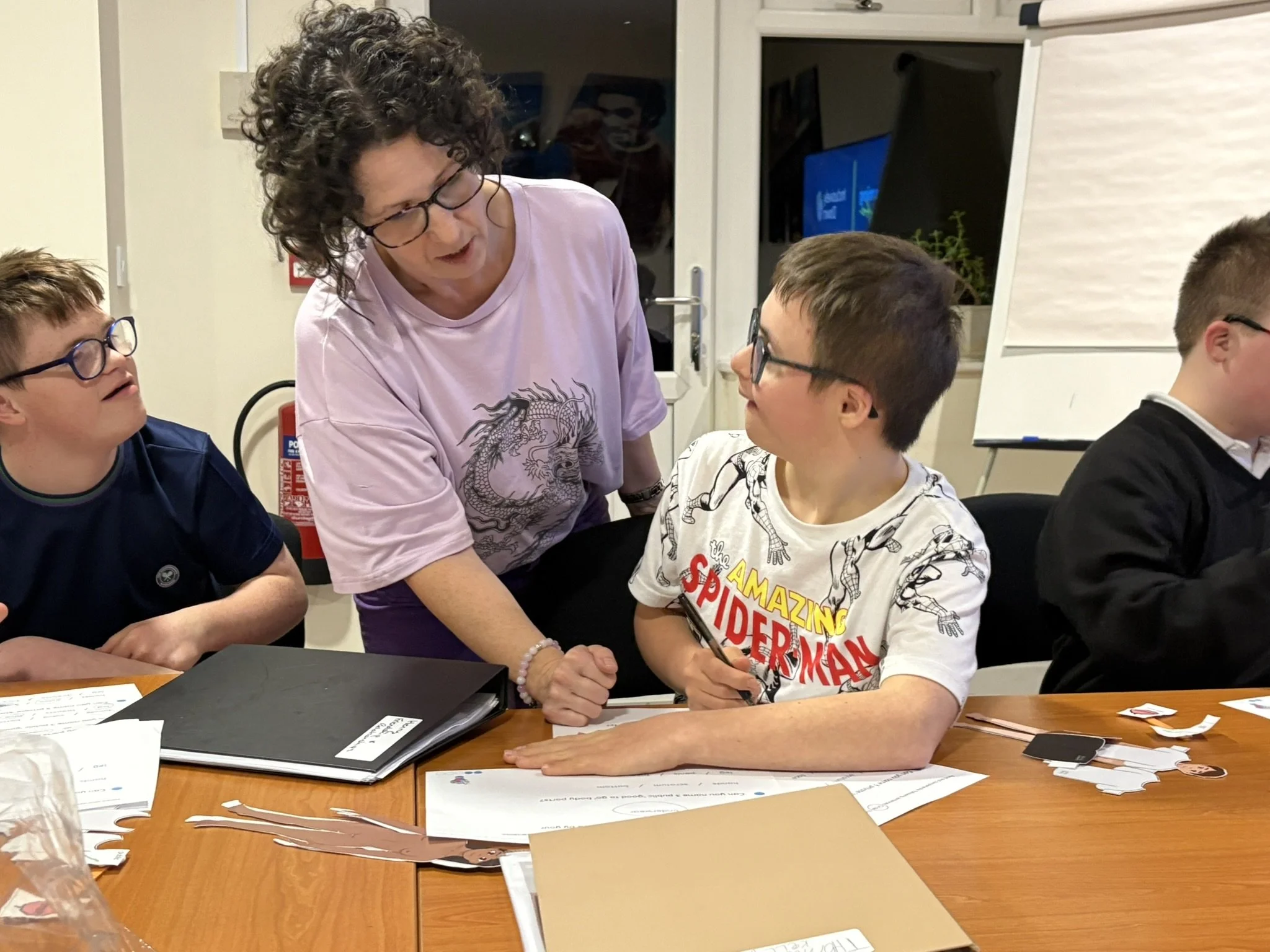
The false choice: age or stage
Too often, RSE for learners with SEND is framed as a binary debate:
Either we stick rigidly to age-based policy
Or we delay content until learners reach a certain developmental stage
In reality, both approaches create risk.
Learners with learning disabilities frequently receive:
the right topics
at the right age
but without the conceptual building blocks required to understand or apply them.
Knowledge without understanding does not equal safety.
Why foundational understanding matters
Let’s take coercive control as an example.
Learners with learning disabilities are at significantly increased risk of perpetrating or experiencing:
coercive and exploitative relationships
mate crime
criminal manipulation
So not teaching about coercive control is not an option.
But teaching it in isolation — without checking what learners already understand — is equally problematic.
To meaningfully understand coercive control, a learner needs prior knowledge of:
what relationships are
how they know different people in their lives
what a healthy friendship looks like
identity and sense of self
consent, choice and boundaries
Without this foundation, “coercive control” becomes an abstract term — not a protective concept.
What works better in practice
Across schools, families and professionals, one approach consistently leads to better outcomes:
Age-appropriate content, made accessible through deliberate sequencing and revisiting.
This means:
teaching the same age-relevant themes as peers
breaking them into smaller, accessible concepts
revisiting and reinforcing learning over time
moving backwards and forwards within the curriculum
checking understanding before increasing complexity
This is not a linear journey.
And it cannot be delivered through one-off lessons or isolated PSHE days. It has to be re-visited in real life experiences, creating a framework for future conversation and approach to issues that arise.
This is what Learning for Life is for - delivering age-appropriate content, when you need it most.
This isn’t about lowering expectations
There’s a persistent myth that adapting RSE for SEND learners means “watering it down”.
In reality, the opposite is true.
When RSE is treated as a linear, age-locked curriculum, learners with SEND are often:
technically “covered”
practically unprepared
and disproportionately vulnerable
Accessible, well-sequenced RSE raises expectations by ensuring learners can:
recognise risk
name what’s happening
understand their rights
and seek support early
That is safeguarding in action.
The question we should be asking
If we are serious about dignity, independence and safety, the question isn’t:
“Is this age-appropriate?”
It’s:
“Do they have the understanding they need to use this knowledge safely — and if not, what foundations are missing?”
That shift, from compliance to comprehension, is where real protection sits.
Age AND Stage, not OR
RSE for learners with SEND is not about rushing content, nor about delaying it.
It’s about sequencing age-appropriate learning in a way that makes sense, sticks, and protects.
Anything less leaves young people exposed — and young people unfairly blamed when systems fail them.