

Dedicated Safe Spaces
Learn and Thrive Response to the Government’s 10-Year Plan for Schools and Colleges - dedicated safe spaces
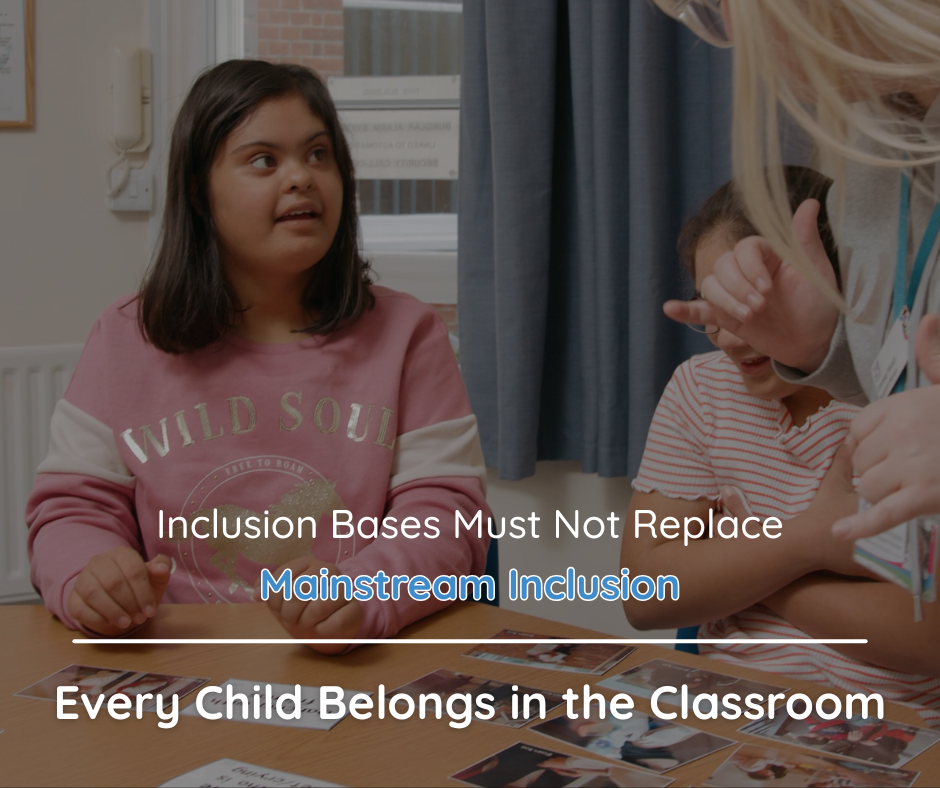
Learn and Thrive agrees that schools and colleges need urgent reform so that every pupil can learn, belong, and thrive. However, we are deeply concerned that the current direction of travel focuses heavily on provision resource hubs, alternative provision and now separate “inclusion bases”, rather than prioritising real inclusion in the mainstream classroom. Much of the language being used reinforces separation, not belonging.
To be clear, we do not oppose the idea of schools having dedicated spaces for additional support. For many young people, calm spaces and targeted interventions can make a meaningful difference. Our concern is not the existence of these spaces, but where they sit in the presentation and emphasis of the wider reforms. When separate provision becomes the headline solution, it risks signalling that inclusion happens somewhere else.
We firmly believe that inclusion means learners with SEND are fully part of everyday classroom life with their peers wherever this is possible and helpful. Physical spaces outside the classroom may provide short term support, but they must never replace the expectation that mainstream teaching is inclusive by default.
We strongly agree with the Down’s Syndrome Association that “every classroom must be a safe, accessible and welcoming space for disabled children, including those who have Down’s syndrome”.
Separate spaces must not become a substitute for real, systemic inclusion across all staff, all classrooms and all day to day learning.
If inclusion is to be meaningful, reform must invest not just in buildings and rooms, but in:
Teacher training that equips all educators with practical inclusive strategies.
Curriculum design that treats learner diversity as normal, not exceptional.
Accountability measures that ensure pupils with SEND are thriving in mainstream settings, not simply relocated to alternative spaces.
Inclusion into a building can very quickly become integration and not true inclusion. Real inclusion means belonging, participation and high expectations within the classroom itself.
We support reform that strengthens schools. We support additional resourcing. We support thoughtful spaces that meet genuine need. What we cannot support is a system where separation quietly becomes the norm.
Inclusion is not a room to visit. It is a culture that must exist in every classroom.
Learn and Thrive
February 2026