

Learn and Thrive response to the LeDeR 2024 Report
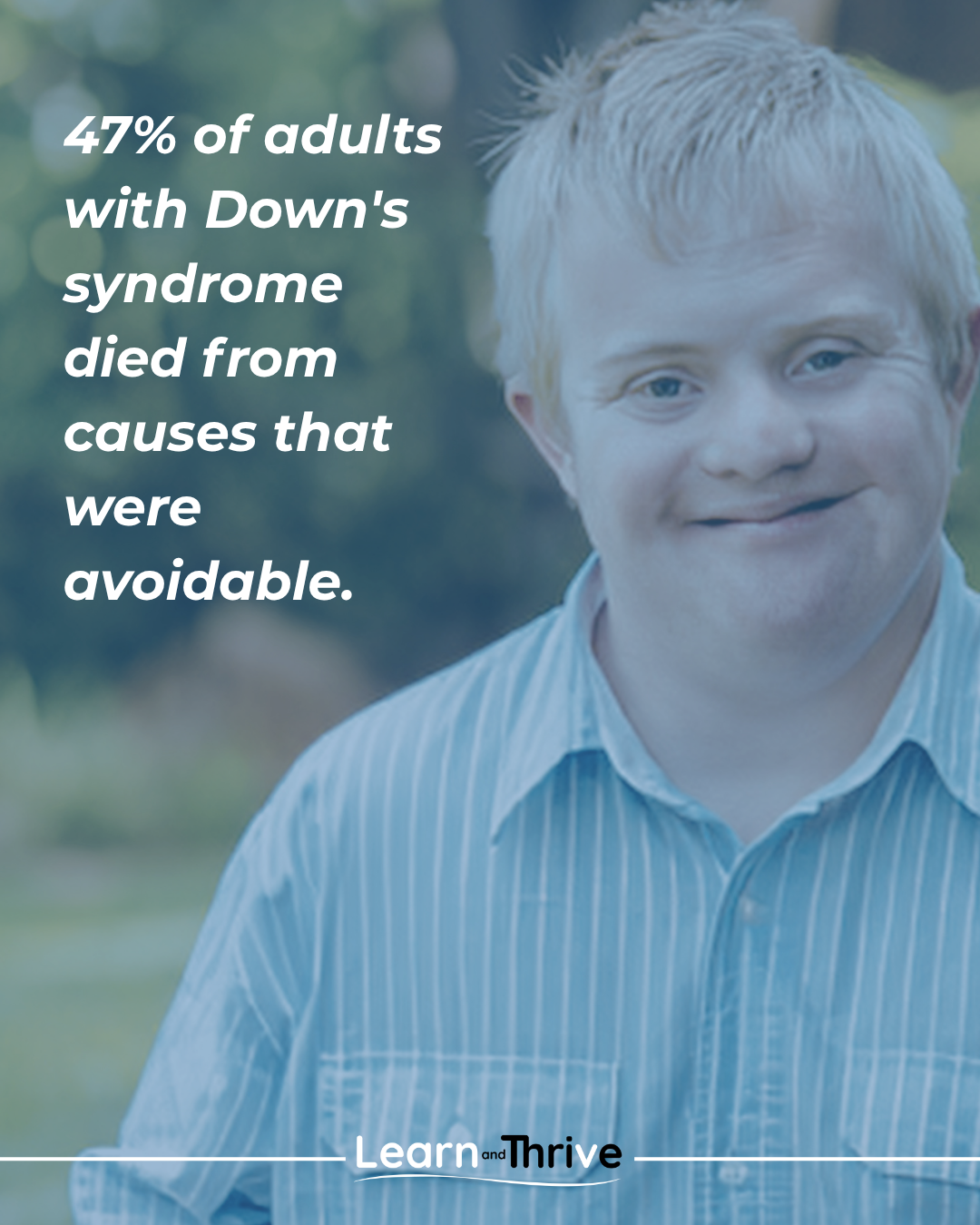
47% of adults with Down's syndrome in the LeDeR 2024 dataset died from causes that were avoidable.
Nearly half. From causes that were treatable or preventable. With the right care, in place at the right time.
If that were your child, your brother, your student — nearly half the time, the answer would be: this didn't have to happen.
The LeDeR 2024 report was published this week. For the first time in the programme's history it includes a dedicated chapter on people with Down's syndrome, something the Down's Syndrome Association and others have long called for. The headline finding is one that our community already knows in their bones, but now we have the data to back it up: the median age of death for adults with Down's syndrome is 59.8 years. The general population median is 81.9. A gap of 22 years. Over three quarters of people with Down's syndrome in this dataset died before the age of 65.
The report also matters for the wider learning disability community. People with a learning disability as a whole are dying on average 19 years younger than the rest of the population. The same systemic failures appear across all diagnoses: delays in care, health concerns dismissed, and reasonable adjustments that simply weren't made. At Learn and Thrive, we work with and for children, young people and adults with Down's syndrome and a wide range of other learning disabilities. This report speaks to all of them.
Background
We think it matters that you know what it took to get here.
The previous LeDeR report, covering deaths in 2023, was completed by King's College London and handed to NHS England in December 2024. Then it vanished. No explanation. No timeline. By July 2025, Parliamentarians, bereaved families and disability charities were demanding it be released. The accusations were direct: the government was sitting on findings it found inconvenient. It was eventually published in September 2025 and then retracted three months later because the data was, in NHS England's own words, "missing and incomplete at the time of analysis." It was republished in January 2026.
We believe that is unacceptable. Not a process failure. Not an administrative hiccup. Simply unacceptable. People died in 2023 whose deaths could have informed changes that might have saved lives in 2024. That accountability was delayed, then delivered broken, then quietly fixed. That is not good enough for any community. For a community that already dies 19 years too young, it is indefensible.
And now this, the report we are responding to today, is the last one of its kind.
This is the final independent academic LeDeR report. Future data will move into a government patient-level dataset. We are not opposed to better data. But we are deeply sceptical that better data collection automatically means better accountability. Independent academic analysis, accessible public reports, and the involvement of people with learning disabilities in shaping what gets published are not administrative details. They are the difference between data that drives change and data that sits on a server. The dedicated chapter on Down's syndrome in this report existed because families, charities and researchers pushed for it for years. We will be pushing just as hard to make sure our community stays visible in whatever comes next.
These deaths have a pattern and it’s not new
People with Down's syndrome have a distinct health profile that services frequently fail to recognise and act on. The leading avoidable causes of death in this dataset were epilepsy, pneumonia and COVID-19. Dementia, predominantly early-onset Alzheimer's, was recorded in nearly 4 in 10 of those who died. These are not surprises. They are known risks, with known warning signs, that still go undetected and unaddressed far too often.
We hear this from our community constantly. Families noticing something is wrong and not being believed. Symptoms attributed to the learning disability rather than investigated. Professionals not knowing what to look for. The report names this: diagnostic overshadowing remains one of the most persistent and deadly failures in the system. When a health change is written off as "just part of their condition," people die from things that could have been caught and treated.
This is why we built our Understanding Health & Prevention Series of accessible resources that help young people, families and the professionals supporting them to identify symptoms, understand when to ask for help, and know which professionals can help and how. Knowing your own body, being able to communicate what's wrong, and having the confidence to be heard are not small things. They are life-saving things.
We are also developing resources covering the Mental Capacity Act and consent, because a person's right to be involved in decisions about their own health and care is fundamental, and it is too often overridden or ignored for people with learning disabilities.
Their words, not ours
The group of people with a learning disability who helped shape this year's report wrote in their foreword: "Far too many people with a learning disability are still dying too young. Why is this not headline news?"
They're right. It should be.
We also want to acknowledge the Down's Syndrome Association's response to this report, which sets out clearly what health and care services must do differently. We share their view that this data must now drive accountability and change, not just understanding.
What has to change
Health and care services need to know the distinct health profile of the people they are supporting. For people with Down's syndrome that means understanding the elevated risks of early-onset dementia, epilepsy, respiratory infections, thyroid conditions, and sensory impairment and not waiting for a crisis to act. For people with other learning disabilities, the specific risks are different but the principle is the same: know your patient, know what to look for, and take what families tell you seriously. When a parent or carer says something has changed, that is clinical information.
Diagnostic overshadowing kills people. Dismissing health concerns as "just part of their condition" kills people. Reasonable adjustments not being made kills people. These are not new findings. They are the same findings, year after year. The question is whether the systems and people responsible for care will finally treat them as urgent.
We will keep building the resources that help, for young people, for families, for the professionals alongside them. Our Understanding Health & Prevention Series is free and available now. Our work on the Mental Capacity Act and consent is coming. None of it is a substitute for systemic change. But all of it matters.
The evidence and the stories from our community are clear. Now we need to see action.
Learn and Thrive is a UK registered charity creating free specialist RSHE/PSHE and early years resources for children and young people with Down's syndrome and other learning disabilities. All our resources are free at learnandthrive.org.uk
Read the LeDeR 2024 full report: https://www.kcl.ac.uk/research/leder
Read the Down's Syndrome Association's response: https://www.downs-syndrome.org.uk/news/news-research/policy-campaigns/dsa-response-to-the-publication-of-the-leder-2024-report/