

When the Right Resource Meets the Right Setting: Newfriars College and Learning for Life
There's a young man at Newfriars College in Stoke-on-Trent who, at the start of this academic year, wouldn't speak in group sessions. At most, he'd whisper something to the teaching assistant beside him. That was it.
A few months in, he's using symbols to communicate his answers. Sometimes, using words and interacting with the group.
It didn't happen because someone worked a miracle. It happened because of something far more straightforward: he knew what was coming next.
A college built around what matters
Newfriars College is an independent specialist college in Stoke-on-Trent, supporting young people aged 16 to 25, all of whom have an Education, Health and Care Plan. Their Independent Living Pathway (ILP) is exactly what the name suggests - a structured, purposeful route towards adult life, built around the skills each person genuinely needs to live as independently as possible.
The curriculum isn't just a nod to independence. It puts it at the heart of its teaching. Students follow courses in wellbeing and relationships, independent living skills, healthy bodies and minds, community participation, cooking, and everyday maths and English. Every course has ten learning objectives and six units. Each student has four personal targets, known as their Core 4, which are reviewed termly and mapped to their EHCP. Progress is tracked, assessed, and evolved.
This is not a college doing RSE and PSHE because they have to. This is a college that understands these subjects as the foundation on which everything else stands.
Tom Hall, assistant head at Newfriars, puts it simply. "A lot of our curriculum is built around life skills and developing independence. Learning for Life fit really nicely and complemented what we already had in place."
The problem every SEND setting knows
Finding resources for this age group is genuinely hard. It's one of the worst-kept secrets in SEND education.
Young people aged 16 to 25 with learning disabilities are, cognitively, often working at a much lower level than their chronological age. But they are not children. They have adult bodies, adult hormones, adult social lives, and adult vulnerabilities. The resources that exist tend to fall into one of two camps: too childish in their imagery and content, or too cognitively demanding to be accessible.
As Amy, one of Newfriars' ILP teachers, puts it: "You either hit the cognitive age and it's aimed too low, or the content is way too high. Having resources at the correct cognition and chronological age is ideal."
Samantha Gibson, another ILP teacher, echoes this. When she joined Newfriars three years ago and started hunting for resources for their bespoke curriculum, she found herself searching the internet with not much to show for it. Then she found Learning for Life.
"I was really impressed by the inclusive images - learners with Down's syndrome, wheelchairs, physical needs, wearing hearing aids - the same as a lot of our learners. It's really nice for them to use resources that look like them."
Tom is equally direct about why it stood out: "It's the best we've found in the market that is age appropriate, still accessible, and about content they're actually engaging with."
What using it actually looks like
Newfriars didn't just download the resources and get on with it. They thought carefully about where and how Learning for Life fitted their curriculum.
It started with a couple of staff members piloting it independently, using it with groups of around eight students with a real mix of disabilities and educational needs. They were impressed enough to show Tom. And he was impressed enough to roll it out across the whole pathway.
Now, every teacher in the ILP has access to the resources. They started primarily in the wellbeing and relationships sessions, but as the content has grown and staff have got more confident with it, it's being pulled into other sessions too.
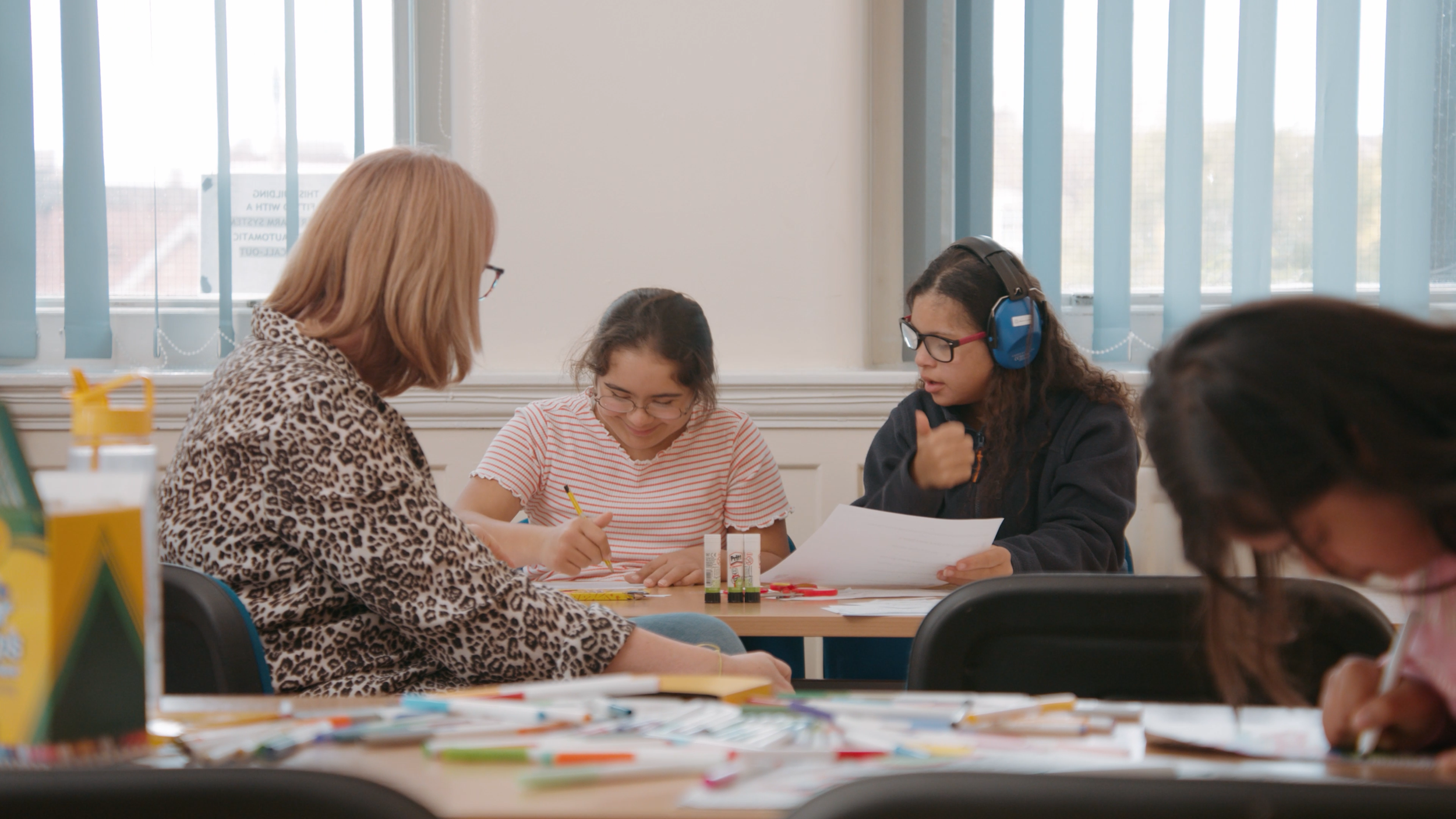
The format itself is a big part of why it works. The structure is consistent: watch a short video, pause, discuss, do an activity. Week after week, the same rhythm. For students who need predictability to feel safe enough to engage, this matters more than most people realise. This isn’t about whacking on a video and letting it roll, the sessions encourage collaboration, group engagement and teacher-led activities.
"They know what's coming next," says Amy. "We'll watch, we stop, we chat, we do an activity, we watch again. And because of that predictability, we see more independence and more confidence in the classroom."
That's where the young man who wouldn't speak comes back in. He isn't non-verbal because he has nothing to say. He was quiet because the uncertainty of group situations was too much. Once he knew the format, once the session felt familiar and safe, he started to engage. The worksheets helped too - repetitive enough in their structure that he can show what he understands, rather than being held back by the format itself.
"Because the worksheets are so repetitive, we can really see what he's got going on in his head," Amy says. "He knows what to expect."
The moments that tell you it's working
There are the measurable things: engagement levels, communication, participation in sessions. And then there are the moments that catch you off guard.
Amy was teaching a unit on different kinds of love. A young lady in her class went to the phone at break time and rang her dad. She explained to him, unprompted, everything she'd just learned. Family love. Romantic love. Where different people in her life sat within those categories. She'd taken it from the classroom, processed it, and applied it to her own relationships. In real time. On her lunch break.
"That was lovely to hear," says Amy. "She'd taken it from the classroom and been able to put it in context outside."
The Families unit delivered another unexpected success. Ten students understanding the difference between half-siblings and step-siblings. "That was a massive success," says Amy. "Ten students understanding it is just huge."
The impact goes beyond individual moments. Samantha talks about the shared language that Learning for Life has helped to create across the whole college. Terms like "trusted adult" are used consistently in the videos and resources and have become part of how staff talk, even those who aren't directly using the materials in their sessions.
"It becomes a common language in college," she says. "Even people that don't use the resources, because it might be a term that there isn't necessarily words for, but we get that out there and then we can use it with the learners."
And it helps when this language is reinforced outside of school too. The same language, from a whole range of people in their lives really helps to reinforce the key messages.
In practice: a student who needs help in a shop knows to look for someone wearing a staff badge, or a police officer, because they've built up that understanding of what a trusted adult looks like in different contexts. That's a safeguarding outcome. It's also an independence outcome.
The bigger picture: vulnerability, hormones, and why none of this is optional
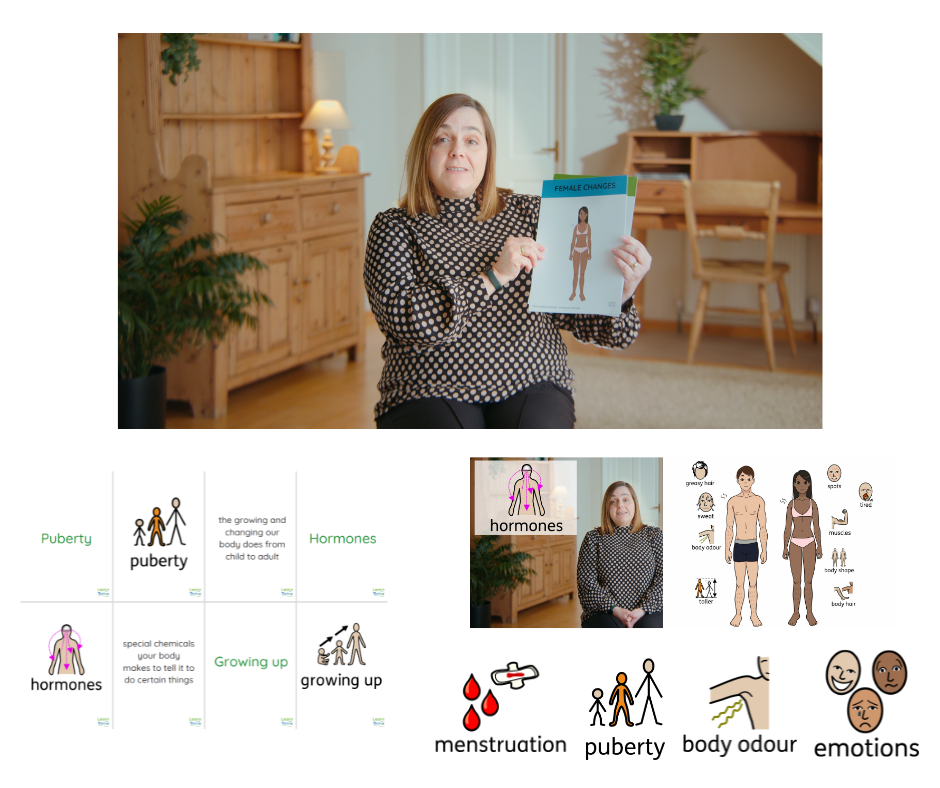
Snippets of our Changing Adolescent Body series and it’s resources.
Now we know these young people are among the most vulnerable in society, but knowing it isn’t enough, we have to take action to give them the vital skills they need to make them as safe as possible. If we don’t, who will?
They may be 18 or 22 or 25, with all the hormones and social complexity that comes with that, but without the same automatic scaffolding that helps many of their peers make sense of it. Nobody handed them an instruction manual for their changing bodies, their feelings, their relationships. And the world is not always kind to people who don't fully understand when something isn't right.
Amy is honest about this. "Cognitively they might not be 16 or 18, but chronologically those hormones are raging through their bodies. Having a resource that helps them understand what's happening to their bodies at an appropriate level, and normalising talking about how you're feeling - it helps them understand what's happening to them. I think sometimes we take for granted that this is a terrifying time for anyone."
Samantha puts it in terms of what they're working towards with the more complex learners: "They might never be fully independently thinking 'that's not safe.' But hopefully, with repetition, they'll have that seed sown. They'll think: I've learned about that. I know that's not quite right. I need to keep my distance."
That seed matters. Whether a young person can verbalise it, use symbols to communicate it, or simply feel something isn't right and move away - that's the goal. And getting there requires that the topic has been covered, repeatedly, accessibly, by staff who feel confident enough to teach it.
"Having resources that help us do that is massive," says Amy. "It's almost life-changing for them to have an understanding of what's going on with their bodies and what's okay and not okay."
A resource for staff, not just students
One thing that stands out in conversations with the Newfriars team is how much the resources matter not just to students, but to the people teaching them.
RSE and PSHE are not always comfortable territory, even for experienced educators. Some topics feel risky to approach without support. The wrong word, a lesson that misses the mark - with this community, the stakes feel higher.
"As a professional, having that guidance of how to structure it is huge," says Amy. "It gives me more confidence doing that session, because I've got such comprehensive resources to back me up."
Samantha adds another angle. The videos use signing throughout. For a college that uses Makaton widely but doesn't have signing experts in every classroom, this is genuinely useful. "It's good to teach us and teach the students, kind of learning together," she says.
Tom is clear that for the college, the resource works because it supports teachers to deliver content with confidence, not because it replaces teaching. "We're still in the business of teaching," he says. "But having Learning for Life informs where we're going and what content is most applicable and relevant."
What makes this partnership different
Newfriars are not just a college using Learning for Life. They're an education partner -one of a small group of settings that work closely with us to make the resources better.
That means what happens in their classrooms genuinely shapes what we build next. Tom talks about the value of that relationship: "You've been really willing to listen to us in terms of what we think, in terms of how it can grow and develop. I'm just excited to see where it's going to go."
That's the point. The resources work as well as they do at Newfriars because a college like Newfriars, - with its clear curriculum framework, its commitment to assessment, its focus on what students actually need post-college - helps us stay grounded in what matters. Real students. Real classrooms. Real life after the bell goes.
Could this work in your setting?
Most SEND settings - whether specialist colleges, supported internship programmes, special schools, or resourced mainstream provision - are grappling with the same things Newfriars was before they found Learning for Life.
The gap in the market for age-appropriate, accessible RSE and PSHE resources is real. The discomfort many educators feel around these topics is real. The vulnerability of the young people in our care is real.
What Newfriars shows is what's possible when the right resources land in a setting that's serious about using them well. When the curriculum framework is there, when staff are supported, and when the approach is consistent - students find their voice. Literally.
Learning for Life’s video library is free to access for all educators. You can sign up, explore the content, and start using it in sessions at no cost. For settings wanting to go further, our education subscription gives you the full resource pack, including session plans, take-home sheets for families, communication sheets, and success criteria aligned with the 2026 RSE curriculum.
If you work with young people aged 9 to 25 with learning disabilities, and you're looking for RSE and PSHE resources that were actually built for them -we'd love for you to take a look.